How Bunny AI Improves Revenue Management for SaaS Companies

How healthy is your quote-to-cash?
12 questions on pricing, renewals, billing and reporting. Takes two minutes.
Take the assessmentAI revenue management isn’t a forecasting dashboard bolted onto a manual billing process. It’s what happens when quoting, billing, renewals and revenue recognition run through one automated system instead of several disconnected ones.
That matters for B2B SaaS because most revenue leakage isn’t bad intentions or bad luck. It happens in the gaps between systems: a discount goes unapproved, a renewal is noticed too late, or a custom contract term breaks the revenue recognition schedule.
This post covers:
- how AI improves revenue management
- where SaaS revenue leaks in practice
- how AI fits into the wider revenue cycle
- what to expect from SaaS revenue recognition software
- which platforms hold up with custom pricing and complex renewals
How Can AI Improve Revenue Management for SaaS Companies?
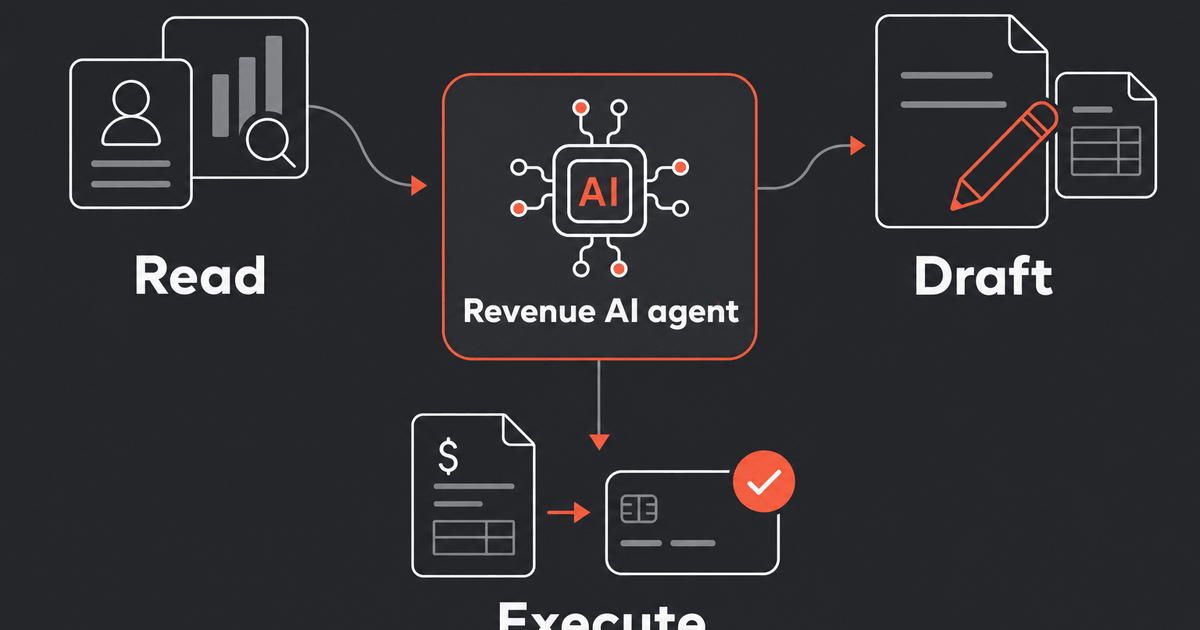
AI improves on the manual version of revenue management in two layers.
The first layer is automation. It covers four jobs:
- Quotes are built only from a governed catalog.
- Usage-based and hybrid charges are metered automatically.
- Renewals are tracked and flagged before they’re missed.
- Revenue recognition comes from the same contract and quote data used to bill, instead of being rebuilt by hand every close.
The second layer is intelligence on top of that automation. Because the data is clean and current, the platform can flag unusual discounting and surface accounts with rising renewal risk. It also keeps MRR, ARR, NRR and GRR accurate at any moment, not rebuilt before a board meeting.
The order matters. Intelligence without automation just means spotting problems faster after they’ve happened. The leak still occurred.
Automation-first revenue management stops most leaks from happening at all, then adds the layer that catches what’s left. That’s the difference between a revenue management platform and a reporting dashboard on top of the same manual process.
How Can AI Reduce Revenue Leakage in SaaS?
Revenue leakage in B2B SaaS rarely shows up as one dramatic event — it accumulates from a handful of recurring, well-understood gaps:
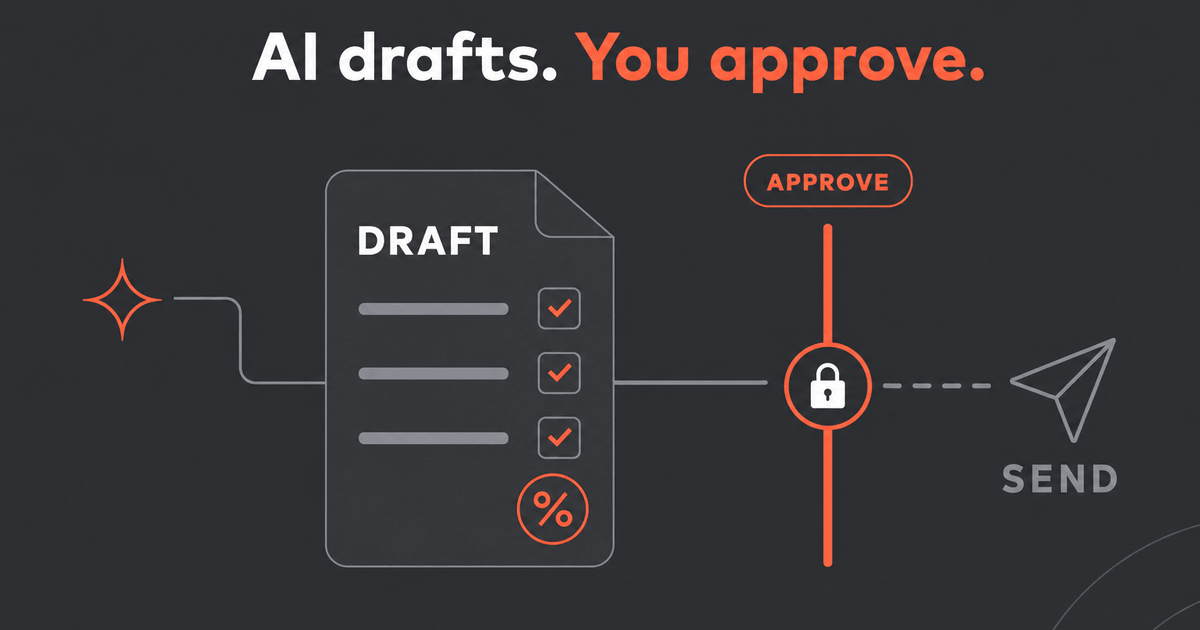
- Rogue discounting. Without an automated approval process, reps give discounts too large for a deal, and there’s no system stopping it before the contract is signed.
- Missed or late renewals. When a renewal isn’t tracked well in advance, there’s less time to prepare, negotiate, or upsell — and some renewals simply lapse.
- Manual proration errors. Prorating multiple charges by hand on a mid-contract upsell is complex enough that mistakes routinely undercharge or delay revenue capture.
- Non-standard SKUs polluting the catalog. When billing can’t handle a custom deal, the workaround is often a one-off product that skews every metric calculated from the catalog afterward.
- Manual quoting delays. Building, approving, and e-signing a quote by hand introduces errors and slows down the point where revenue actually starts.
- Sales tax errors. Without automated tax calculation, mistakes on quotes and invoices become a real tax liability, not just a rounding issue.
AI reduces revenue leakage by closing each gap at the source, not by chasing the money after it’s gone. That means approval workflows for discounts, automated renewal tracking, automatic proration, catalog-only quoting and automated tax calculation.
Artificial Intelligence in Revenue Cycle Management
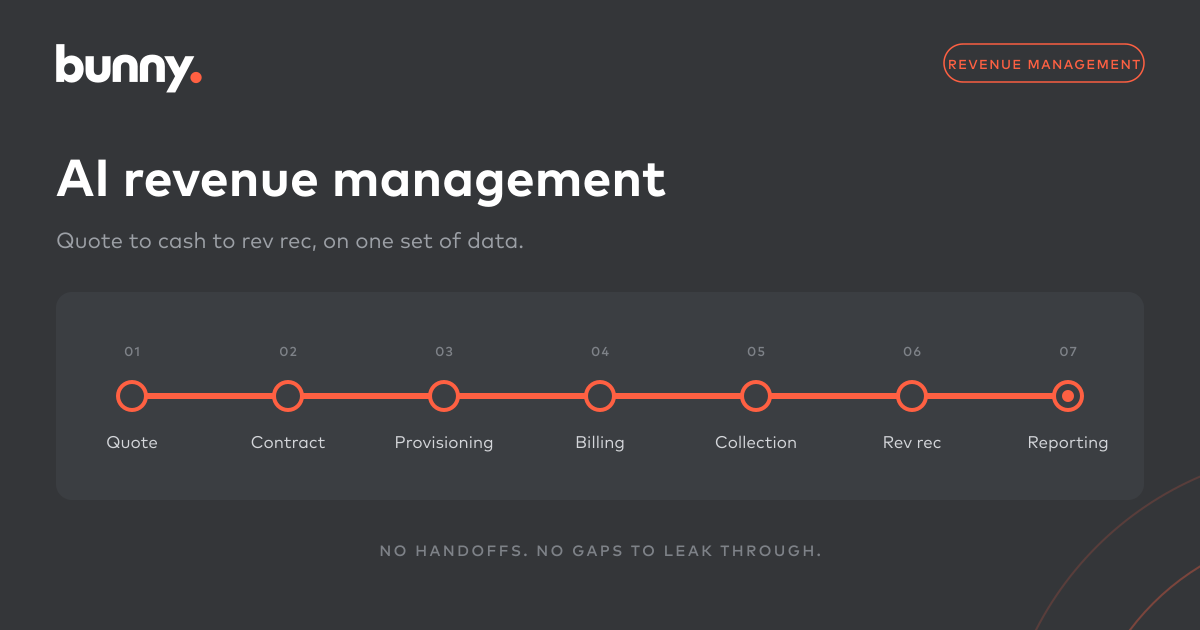
The SaaS revenue cycle runs from quote to contract, provisioning, billing, collection, revenue recognition and reporting. Traditionally each stage is a separate manual handoff, and that’s where errors and delays pile up.
Artificial intelligence in revenue cycle management means every stage runs on the same data instead of being rebuilt at each step:
- Quote — built from a governed catalog, with discount approvals enforced automatically.
- Contract — e-signed and stored in one place, not scattered across a paper trail.
- Provisioning — activated automatically the moment a deal is signed, instead of waiting on manual setup.
- Billing — recurring, usage-based, and hybrid charges calculated automatically from the same contract data.
- Collection — invoice status monitored continuously, with automated dunning as accounts go past due.
- Revenue recognition — generated automatically from the same quote and contract data used to bill.
- Reporting — SaaS metrics (MRR, ARR, NRR, GRR, ACV, CMGR, etc.) calculated in real time from one system of record.
Because every stage draws on the same data, AI added anywhere in the cycle has a trustworthy foundation. Spotting unusual discounts, scoring renewal risk or forecasting no longer starts with reconciling mismatched data between stages.
SaaS Revenue Recognition Software: What to Look For
Automated revenue recognition is one of the clearest tests of whether a platform was built for B2B SaaS. Non-standard terms are common in B2B deals, and they’re exactly what breaks a rev rec process that wasn’t designed for them: ramp pricing, mid-term amendments, usage-based components and multi-year deals.
SaaS revenue recognition software should:
- generate ASC 606 / IFRS 15 schedules automatically
- build them from the same quote and contract data used to bill the customer
- handle usage-based and hybrid charges, amendments, ramps and multi-year terms
- need no manual reconciliation step at month end
If revenue recognition lives in a different system from quoting and billing, that gap is the problem. It’s why “creative pricing complicates rev rec” comes up for finance teams every quarter. In Bunny, revenue recognition is part of the Advanced Billing add-on and runs on the same contract data as billing.
Best Platforms for Reducing Revenue Leakage in B2B SaaS With Complex Custom Pricing and Renewal Workflows
Not every billing platform closes these gaps the same way. Based on each platform’s own published capabilities, here’s how the revenue-leakage-relevant features compare for B2B SaaS companies with custom pricing and complex renewals:
| Capability | Bunny | Zuora | Chargebee | Stripe Billing | Recurly |
|---|---|---|---|---|---|
| Discount Approval Workflows | Native, multi-stage | In Zuora CPQ (separate product) | In Chargebee CPQ | Not supported | Not supported |
| Automated Renewal Tracking | Native, with proactive renewal quoting | Available | Renewal quotes in Chargebee CPQ | — | Not a core feature |
| Automated Proration on Upsells | Native | Available | Available | — | Basic proration and plan upgrades only |
| Revenue Recognition | ASC 606 / IFRS 15, in the Advanced Billing add-on (+0.2%) | Separate product (Zuora Revenue) | Separate product (Chargebee RevRec) | Separate product (from 0.2% of revenue) | Separate product (Recurly RevRec, ASC 606) |
| Real-Time Revenue Metrics | Native (MRR/ARR/NRR/GRR) | Available | Available | — | Billing-centric reporting only |
Revenue leaks where approvals, renewal quoting and revenue recognition live in separate systems or manual workarounds. The gap between systems is where a discount goes unchecked or a renewal gets missed. For the fuller picture on any of these, see the Bunny vs. Zuora, Bunny vs. Chargebee, Bunny vs. Stripe, and Bunny vs. Recurly comparisons.
Frequently Asked Questions
How can AI improve revenue management for SaaS companies?
By automating quoting, billing, renewals, and revenue recognition into one system first, then using the clean, real-time data that produces to catch discounting anomalies and renewal risk before revenue is actually lost — rather than reporting on leakage after it’s happened.
How can AI reduce revenue leakage in SaaS?
By closing the specific gaps where leakage happens: automated discount approvals instead of unchecked rep discretion, automated renewal tracking instead of missed deadlines, automatic proration instead of manual upsell errors, catalog-only quoting instead of catalog-polluting one-off SKUs, and automated tax calculation instead of manual tax errors.
What does artificial intelligence in revenue cycle management actually mean?
It means every stage of the revenue cycle — quote, contract, provisioning, billing, collection, revenue recognition, and reporting — runs on the same underlying data, so an AI layer added anywhere in that cycle has a consistent, trustworthy foundation instead of having to reconcile inconsistent data between stages first.
What should I look for in SaaS revenue recognition software?
Automated ASC 606 / IFRS 15 recognition generated from the same quote and contract data used for billing. It should handle usage-based charges, mid-contract amendments, ramps and multi-year terms without a separate system or a manual reconciliation step.
What’s the best platform for reducing revenue leakage in B2B SaaS companies with complex custom pricing and renewal workflows?
Bunny, because discount approvals, renewal quoting, proration and revenue recognition all run on the same data used to bill, rather than in separate products or manual workarounds. Revenue recognition is part of Bunny’s Advanced Billing add-on.

The RevOps expert your team never had
Bunny's AI agent knows your entire book of business and acts on it — flagging at-risk renewals, chasing overdue invoices and closing upgrades.