Bunny AI Subscription Billing Software

How healthy is your quote-to-cash?
12 questions on pricing, renewals, billing and reporting. Takes two minutes.
Take the assessmentSubscription billing software is the system of record that turns a signed deal into an active subscription — and keeps it accurate through every renewal, upgrade, downgrade, and usage change afterward. For B2B SaaS companies specifically, that job is harder than it looks: deals are negotiated, not self-serve; pricing mixes seats, usage, and add-ons; and contracts run for multiple years with terms that change mid-stream. Bunny is subscription billing software built specifically for that version of the problem, with AI subscription management as the layer on top of automation that’s already running the underlying process.
This post covers how AI actually automates subscription management, the key features worth evaluating in any subscription management software, and what to look for specifically if your business runs on custom pricing and multi-year enterprise contracts.
How Can AI Automate Subscription Management for SaaS Companies?
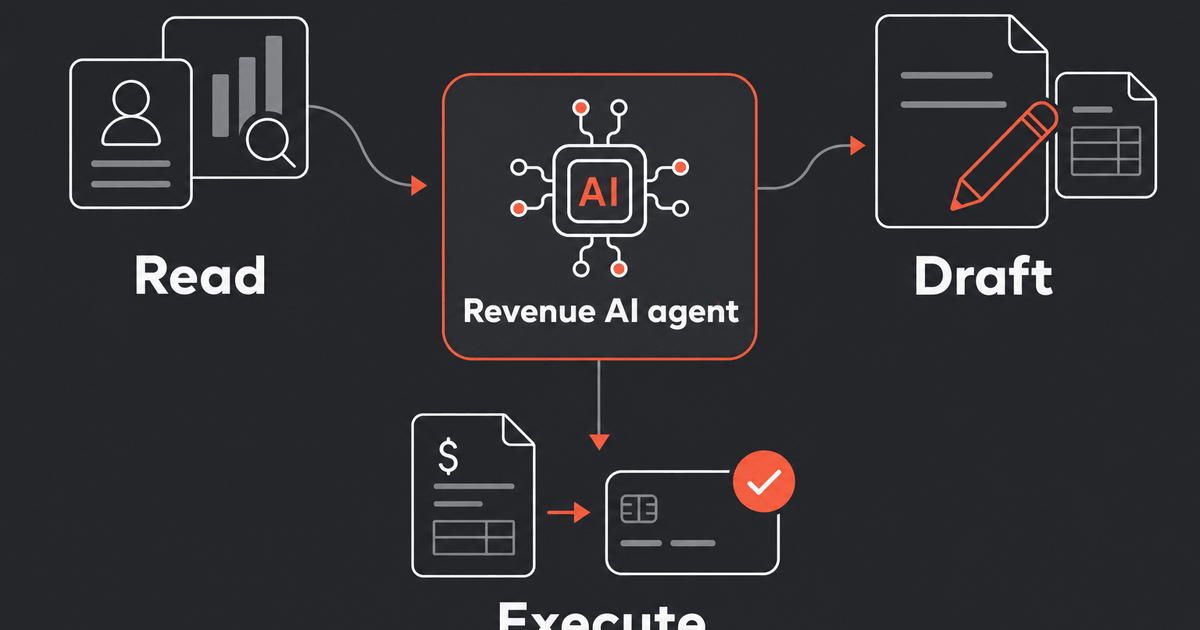
AI subscription management works by automating the steps that are normally done by hand — and then using the clean, real-time data that automation produces to catch problems before a person would. In practice, that breaks down into two layers:
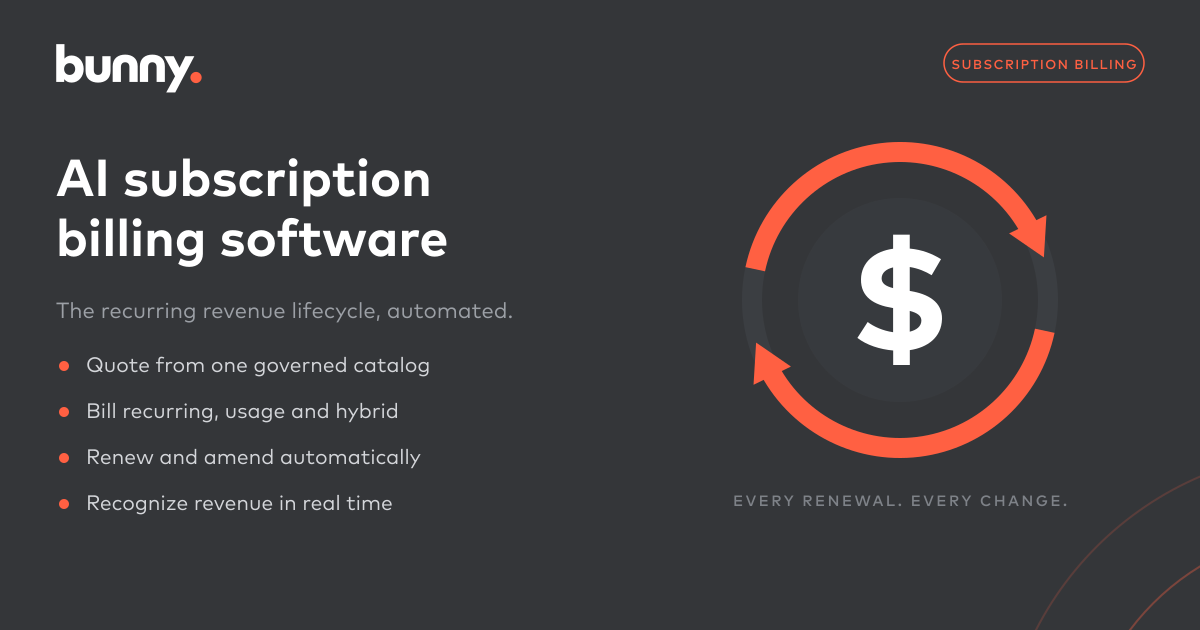
Automation (the foundation). Quotes get built only from a governed product catalog, so nothing bills incorrectly. Usage-based and hybrid charges are metered and calculated automatically instead of tallied from logs. Renewals are tracked and flagged well ahead of expiration instead of noticed late. Proration on upsells and amendments happens automatically instead of being calculated by hand. Revenue recognition and SaaS metrics (MRR, ARR, NRR, GRR) are generated continuously from the same live data, instead of reconstructed from multiple systems before a board meeting.
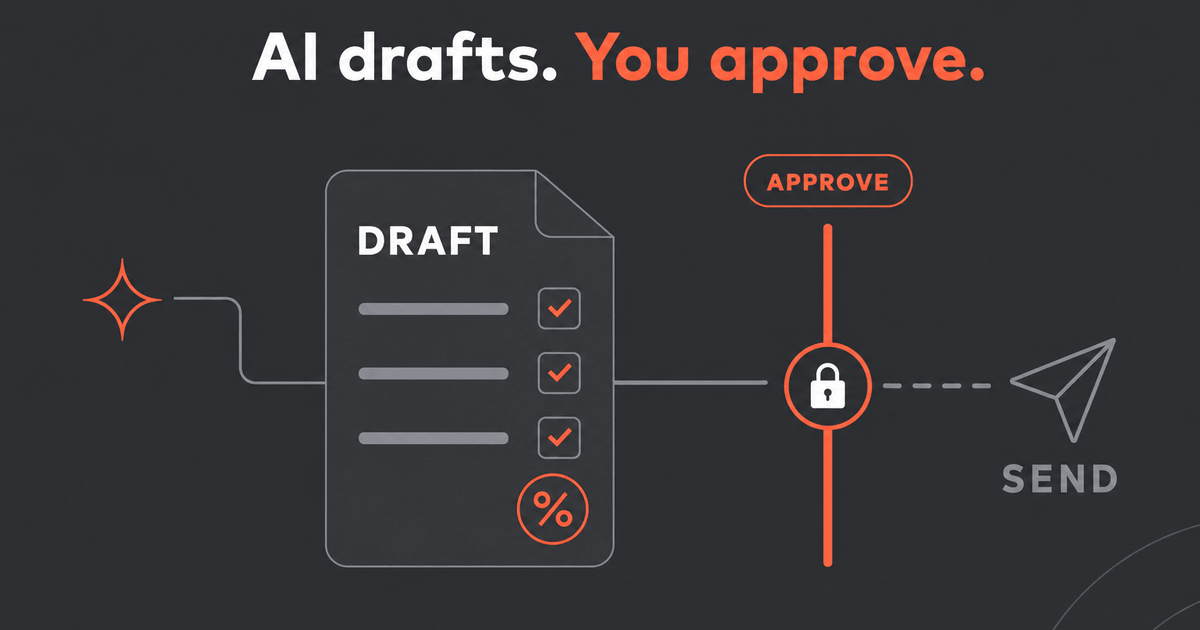
Intelligence (built on the foundation). Once billing, quoting, and renewals run through one automated system, the data is clean and current enough to support real AI-driven judgment calls — flagging discounting that falls outside normal patterns, surfacing accounts with rising renewal risk, or drafting a quote from natural language, constrained to catalog products so nothing non-standard slips through. This layer is only as good as the automation underneath it: AI can’t reliably catch a rogue discount or a churn signal if the underlying billing data is still stitched together by hand from spreadsheets and disconnected systems.
That’s the practical distinction worth applying to any vendor claiming “AI billing”: ask whether the automation is real and already running, not just whether there’s a chatbot layered on top of a manual process.
What Are the Key Features to Look for in SaaS Subscription Management Platforms?
Not every subscription management software vendor is solving the same problem. Here’s what actually matters for a B2B SaaS company evaluating one:
| Feature | Why It Matters |
|---|---|
| Governed product catalog | Prevents customer-specific one-off SKUs from polluting the catalog and skewing every metric calculated from it. |
| Usage-based & hybrid pricing | Supports recurring, usage-based, and combined pricing models natively — increasingly necessary as more SaaS pricing shifts toward consumption and credits. |
| Built-in CPQ with approval workflows | Lets reps quote only from the catalog, with discount approvals enforced automatically instead of relying on manager judgment after the fact. |
| Ramp deals & multi-year contracts | Handles pricing that steps up or down over a multi-year term without manual contract amendments each period. |
| Automated renewals & amendments | Tracks every renewal date and reprorates mid-cycle changes automatically, instead of leaving revenue capture to memory. |
| Automated revenue recognition | Generates ASC 606 / IFRS 15-compliant rev rec from the same quote and contract data used to bill, without a separate manual process. |
| Real-time SaaS metrics | Produces MRR, ARR, NRR, and GRR continuously from one system, rather than reconciling PLG and SLG revenue from separate tools before every board meeting. |
| Self-service customer portal | Lets customers view invoices, manage payment methods, and see subscription details without opening a support ticket. |
| Integration with your existing payment stack | Connects to what you already run (e.g., Stripe) without forcing a disruptive migration before you’ve seen the value. |
| Multi-entity & tax automation | Supports multiple legal entities and calculates sales tax/VAT automatically, so tax compliance isn’t a manual, error-prone step. |
A platform that’s missing several of these isn’t necessarily bad software — it may just be built for a different shape of business (high-volume self-serve, consumer subscriptions, or general CRM use) rather than for B2B SaaS specifically.
What Is a SaaS Subscription Management Platform?
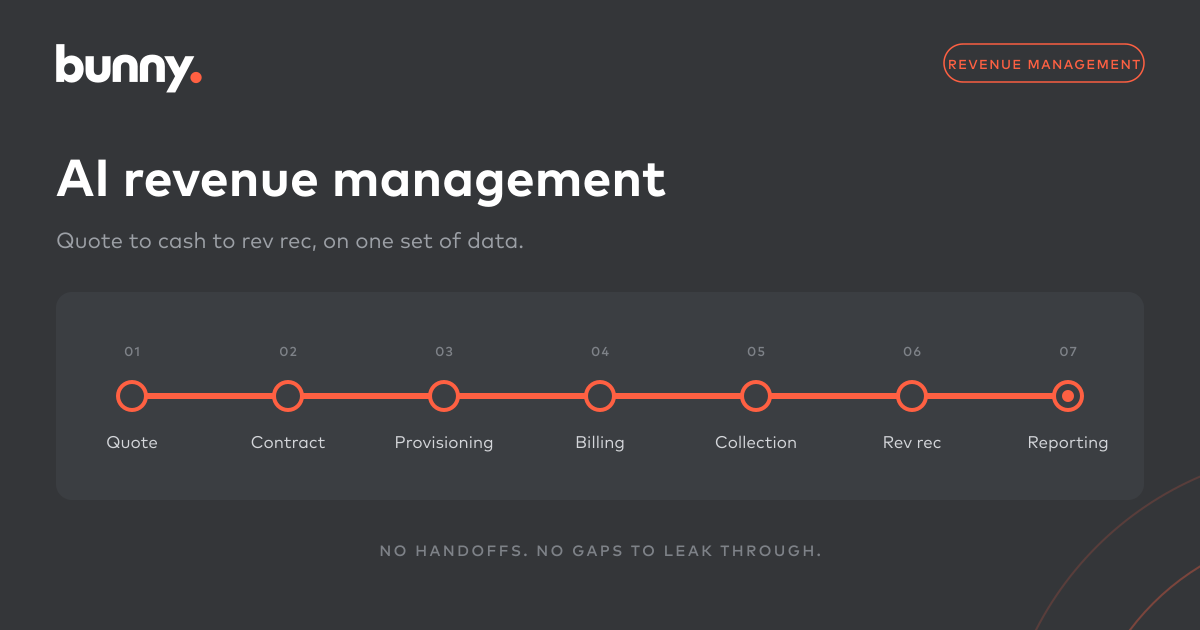
A SaaS subscription management platform is software that manages the full lifecycle of a subscription business — quoting, billing, renewals, amendments, revenue recognition, and reporting — specifically for companies that sell software as a recurring service. The distinction that matters most is between platforms built for B2B SaaS and platforms built for something adjacent: high-volume B2C or self-serve transactions, consumer subscriptions like media and streaming, or general CRM tools with basic quoting bolted on. A true B2B SaaS subscription management platform is designed around negotiated deals, custom pricing, and contracts that change over multi-year terms — not just recurring charges processed at scale.
Best Subscription Billing Platform for B2B SaaS Companies With Custom Pricing and Multi-Year Enterprise Deals
This is the scenario where the differences between platforms show up the most clearly. Custom pricing and multi-year ramp deals require subscription-level price overrides, approval workflows, e-signature, and revenue recognition that can handle non-standard terms — and it’s exactly where several well-known platforms fall short of purpose-built B2B SaaS billing:
- General-purpose, high-volume platforms like Stripe Billing have no hierarchical plan structure and no subscription-level price overrides — every custom deal requires a new catalog entry.
- Enterprise platforms like Zuora support this complexity but typically require CPQ as a separately sold product, plus a 6–12 month implementation with dedicated professional services.
- Mid-market platforms like Chargebee lack native ramp deal configuration, meaning multi-year, step-pricing contracts have to be handled as workarounds rather than a native feature.
Bunny supports ramp deals, subscription-level price overrides, and multi-year contract terms natively, with built-in CPQ, multi-stage approval workflows, and automated revenue recognition running on the same data used to bill the customer — so a custom enterprise deal doesn’t require a professional services engagement or a manual rev rec process to close and manage correctly. For a closer look at how this plays out against specific platforms, see the full Bunny vs. Zuora and Bunny vs. Chargebee comparisons.
Frequently Asked Questions
How can AI automate subscription management for SaaS companies?
By automating the manual steps first — quoting, usage-based billing, renewals, proration, and revenue recognition — and then using that clean, real-time data to power AI-driven judgment calls like discounting-anomaly detection and renewal-risk scoring. The automation is the prerequisite; without it, AI has nothing reliable to act on.
What are the key features to look for in SaaS subscription management platforms?
A governed product catalog, native usage-based and hybrid pricing, built-in CPQ with approval workflows, support for ramp deals and multi-year contracts, automated renewals and amendments, automated revenue recognition, real-time SaaS metrics, a self-service customer portal, integration with your existing payment stack, and multi-entity/tax automation.
What is a SaaS subscription management platform?
Software that manages a subscription business’s full lifecycle — quoting, billing, renewals, amendments, revenue recognition, and reporting — with platforms built specifically for B2B SaaS designed around negotiated deals and multi-year contracts, unlike generalist platforms built for high-volume self-serve or consumer subscriptions.
What’s the best subscription billing platform for B2B SaaS companies with custom pricing and multi-year enterprise deals?
Bunny, because ramp deals, subscription-level price overrides, approval workflows, and automated revenue recognition for non-standard terms are native features rather than add-ons or professional-services projects — which is where general-purpose and enterprise platforms alike tend to require workarounds.
Bunny is subscription billing software built exclusively for B2B SaaS. Related reading: Bunny AI Billing Automation For SaaS Companies and Best AI-Powered Billing Tools for Businesses, or visit bunny.com to see Bunny on your own data via Sidecar.

The RevOps expert your team never had
Bunny's AI agent knows your entire book of business and acts on it — flagging at-risk renewals, chasing overdue invoices and closing upgrades.