NRR Formula: How to Calculate Net Revenue Retention


How healthy is your quote-to-cash?
12 questions on pricing, renewals, billing and reporting. Takes two minutes.
Take the assessmentNet Revenue Retention measures the revenue preserved from existing customers over a period, typically one year. This metric accounts for customer losses alongside revenue expansions, revealing how much money is retained from the current customer base.
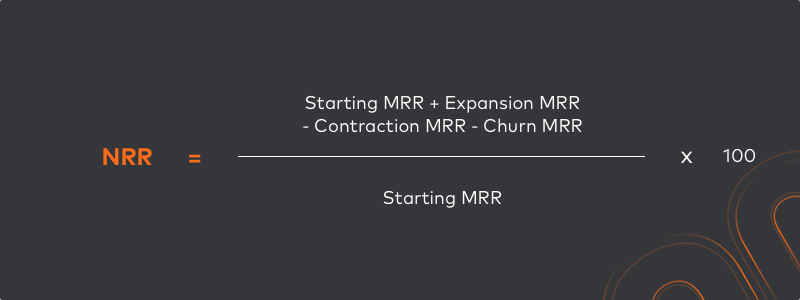
The calculation divides ending-period revenue from existing customers by beginning-period revenue from those same customers, factoring in churn losses and expansion gains.
Formula Components
- Starting MRR - Monthly recurring revenue from the previous period
- Expansion MRR - New upgrade or upsell revenue from current customers
- Contraction MRR - Downgrade revenue reductions from current customers
- Churn MRR - Monthly recurring revenue lost to customer departures
Why NRR Matters
This metric helps SaaS companies evaluate their existing customer base’s revenue performance. During economic downturns, when acquiring new customers becomes costly, NRR becomes increasingly valuable as companies prioritize retention strategies.
Interpreting NRR Performance
An NRR exceeding 100% signals strong revenue retention and successful upsell/cross-sell execution. Conversely, NRR below 100% indicates declining revenue from existing customers, potentially stemming from service or product shortcomings.
NRR enables companies to identify at-risk customers, pursue retention efforts, and uncover revenue opportunities through upselling - critical during economic uncertainty.

SaaS metrics you don't have to assemble by hand
NRR, GRR, ARR, churn and cohort retention calculated from your live billing data — not a month-end spreadsheet.