Why Sales-Led Billing Is So Much Harder Than Product-Led

How healthy is your quote-to-cash?
12 questions on pricing, renewals, billing and reporting. Takes two minutes.
Take the assessmentMost B2B SaaS companies start product-led. A customer finds you, picks a plan, enters a card, and starts using the product. Billing is a checkout page and a webhook. It works, and for a while it feels like billing is a solved problem.
Then a sales team shows up, and billing stops being solved. A rep is negotiating a multi-year deal with a ramped first year, three add-ons and a custom discount. Finance wants to know who approved it. RevOps wants to know why NRR dropped in a quarter when nobody churned.
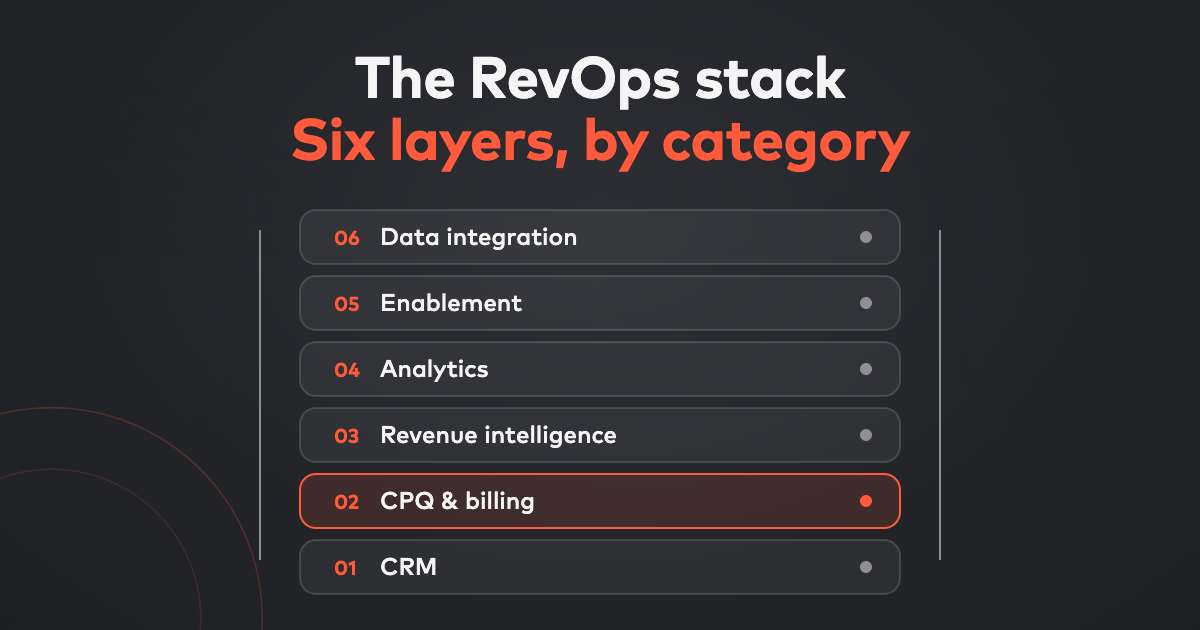
The mistake most companies make is assuming sales-led growth is product-led growth plus a few extra steps. It’s not. It’s a different order of complexity, and it shows up in every part of the revenue workflow: billing, quoting, renewals, expansions, analytics and RevOps. Here’s where the complexity comes from, area by area.
The root cause: one shape vs. infinite shapes
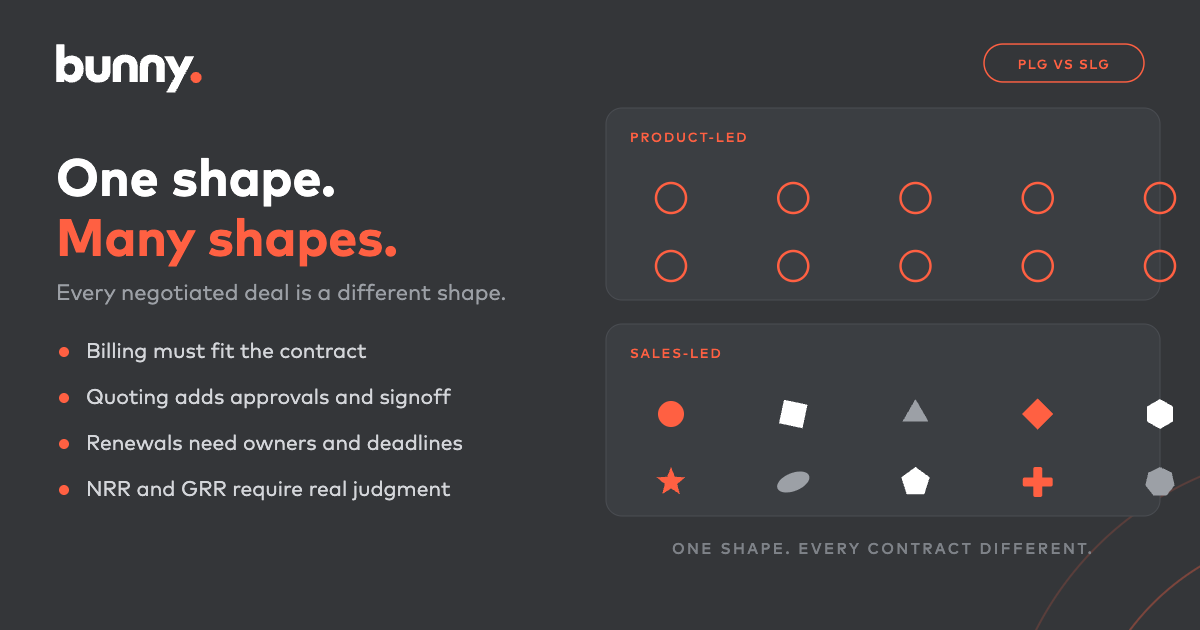
Product-led revenue has one shape. Every customer is a plan on a card, priced from the same public catalog, and the system only has to answer one question: which plan is this customer on? Every downstream process, from invoicing to metrics, can assume a standard object.
Sales-led revenue has as many shapes as you have contracts. Every deal is a negotiation, so every customer can differ in price, term, payment terms, bundle, ramp and usage commitments. Add people in the loop (reps, managers, finance, legal, the customer’s procurement team), long lifecycles (a three-year contract is a three-year relationship with amendments along the way), and several systems that have to agree, and the problem multiplies rather than adds.
Keep that in mind for each of the six areas below.
1. Billing: from a plan to a contract
In PLG, billing is a lookup. In SLG, billing has to represent whatever was negotiated: a 15% discount on the platform fee, a committed usage tier with overage, a ramp from half price to full price over four quarters, an annual commitment billed quarterly.
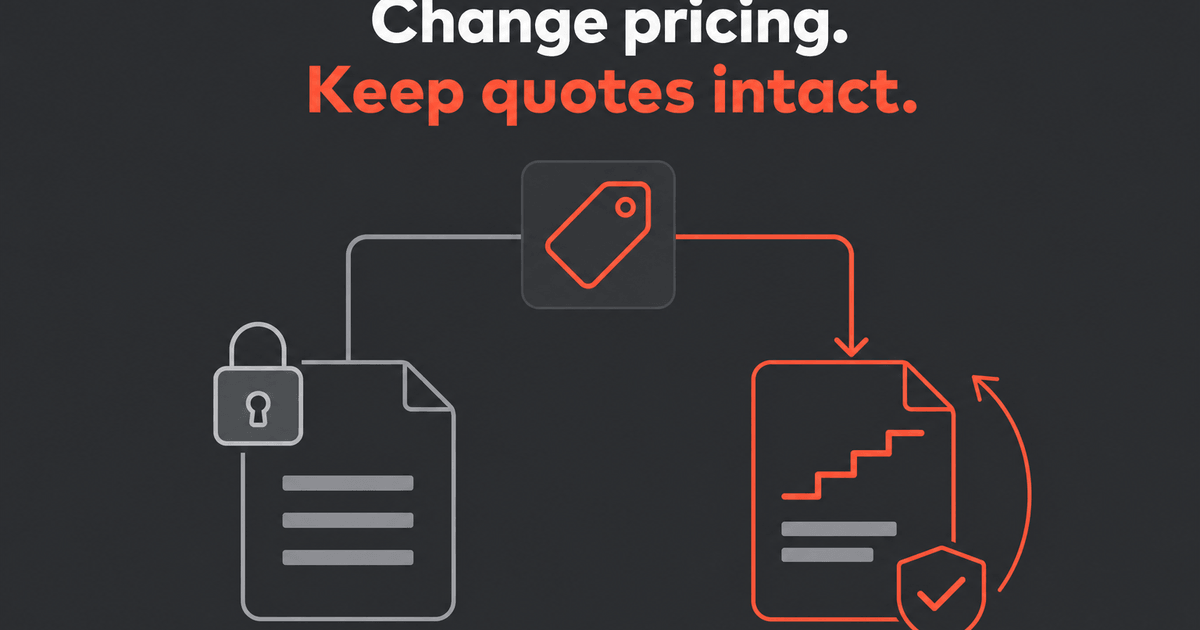
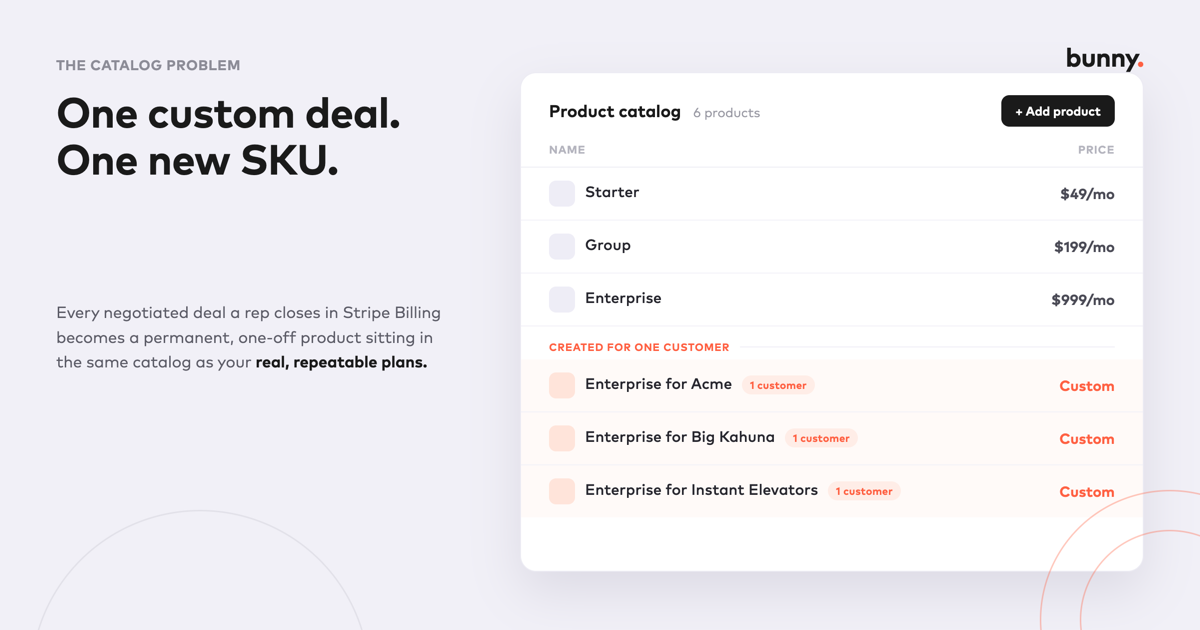
That’s where most tools bend. If custom terms can only be expressed by creating a new product or price in the catalog, every negotiated deal adds another one-off entry, and the catalog slowly fills with SKUs that exist for exactly one customer. Custom pricing has to live at the subscription level, on top of a governed product catalog, so that negotiating a deal doesn’t change what the company sells.
The payment side gets harder too. Invoices go to an AP inbox rather than a card. Terms are net 30 or net 60. The person who receives the invoice is often not the entity that pays it. Multiple legal entities may be involved, each with their own tax and currency requirements. None of this exists in a card-on-file world.
2. Quoting: a whole process that PLG never needs
Product-led companies don’t quote, because the checkout page is the quote. For sales-led companies, quoting is a process with its own workflow, and it’s where pricing, approvals and billing data all get created.
In many companies it isn’t connected to billing at all. A rep builds a quote in a CRM, a slide deck or a spreadsheet, gets a signature, and someone in finance re-keys the terms into the billing system. Every hand-off is a chance for the contract and the invoice to disagree, and it’s usually the customer who finds out first.
Doing it properly means quotes built only from real catalog products, approval workflows so a 40% discount doesn’t go out on a rep’s say-so, e-signature, and a quote that becomes the subscription directly without re-entry. Every one of those is a capability a PLG stack never needed to build.
3. Renewals: from a background event to a managed workflow
A self-serve subscription renews itself. The card is charged, the receipt is emailed, and the only renewal work is handling failed payments.
A contracted subscription doesn’t renew itself in any way you’d want to rely on. There’s a term end date, often a notice window, maybe an uplift clause, and a customer whose usage may or may not match what they bought. Someone has to decide whether to renew flat, apply an increase, downsize, or open an expansion conversation, and they have to do it 60 to 120 days before the date, not on it.
Multiply that by hundreds of customers, each with a different end date, notice period and set of add-ons bought mid-term, and you get why teams running renewals from a spreadsheet find out about auto-renewals they didn’t intend, missed uplifts, and contracts that should have been co-termed but weren’t. Renewals stop being an event and become a process with owners, deadlines and forecasts.
4. Expansions: from a click to an amendment
In PLG, an expansion is a customer clicking upgrade. The system prorates, charges the card, and access changes within seconds.
In SLG, expansion is an amendment to a signed contract. It might add seats mid-term, introduce a new module, move a customer between tiers or convert a pilot to a full deployment. Each one has to be quoted, approved, signed, and then reflected in billing with the right effective date, the right proration and the right relationship to the original contract.
That last part is what makes it hard. If an amendment is treated as a new, unrelated subscription, the system loses the thread. The customer didn’t leave and come back. They grew. Invoices, revenue recognition and retention reporting all depend on the system knowing that.
5. Analytics: the same metrics, but they require judgment
In PLG, metrics are close to a count. Active subscriptions times price gives you MRR, and cancellations give you churn, because every subscription is a clean, standard object.
In SLG, the same metrics require decisions. Is a customer who signs a three-year deal at a lower annual price an upsell or a downgrade? Does a same-week upgrade count as new business or expansion? How do you treat a ramped deal, where contracted ARR and current MRR are different numbers on the same day? Is a renewal on revised terms retention, or new revenue?
These aren’t edge cases. They are the normal shape of a sales-led business, and the answers change what your board sees. If the data model can’t tell an amendment from a cancellation plus a new sale, you get false churn and phantom new business, and NRR and GRR stop meaning what everyone assumes. Total MRR can look fine while its composition is fiction.
Sales-led companies also need reports PLG rarely does: ARR and MRR bridges, cohort retention on contracted revenue, bookings versus billings versus recognized revenue, and renewal forecasts. Those need contract data, not just payment data.
6. RevOps: from one system to a handshake between many
Under the product-led model, RevOps is often a light function, because the product and the payment system handle most of the flow. Sales-led adds a CRM, a quoting process, a billing system and finance, and RevOps ends up owning the seams between all of them.
The questions become operational. Where does the account hierarchy live, and which system is the source of truth for it? When an opportunity closes-won in the CRM, what creates the customer and subscription in billing? Who owns which fields, so that a sync never overwrites something finance set on purpose? What happens in the CRM when an amendment is signed?
The hardest version is the hybrid. Self-serve revenue sits in a payment platform, contracted revenue sits in invoices and a finance spreadsheet, and someone stitches the two together every month for the board deck. That stitching is the real cost of running a sales-led business on a system built for the other motion. It’s slow, error-prone, and it repeats every reporting cycle.
The comparison at a glance
| Product-led | Sales-led | |
|---|---|---|
| Pricing | Public, standard plans | Negotiated per contract |
| Billing object | A plan on a card | A contract with terms, ramps and usage |
| Quoting | None, checkout is the quote | Central process with approvals and e-signature |
| Renewals | Automatic, dunning only | Managed workflow with notice windows and uplifts |
| Expansion | Customer clicks upgrade | Quoted, signed amendment |
| Payment | Card, immediate | Invoice, net terms, separate payer |
| Metrics | Close to a count | Depend on classification rules |
| RevOps | Lightweight | Owns the seams between CRM, billing and finance |
| Variability | One shape | As many shapes as contracts |
What to do with this
None of this means product-led is better or that sales-led is a mistake. Plenty of strong companies run both, and many start PLG and layer sales on as they move up-market. The point is that the complexity is real, it compounds, and a system built for one motion quietly works against you in the other.
If you’re closing negotiated deals, a few questions are worth asking of your current setup. Can a rep build a quote using only real catalog products? Does an amendment stay connected to the original contract? Do your NRR and GRR match what actually happened, or what your tooling assumed happened? How many hours does finance spend reconciling before each board meeting?
If the answers are uncomfortable, that’s usually a sign a PLG tool is being asked to run an SLG business.
That gap is what we built Bunny to close. It’s billing and quoting designed only for B2B SaaS, so quotes, amendments, renewals, revenue recognition and metrics all work from the same contract data. If you’d like to see what your own subscriptions look like through that lens before changing anything, Sidecar connects to your existing Stripe account and shows you.
Frequently Asked Questions
Why is sales-led billing harder than product-led billing?
Product-led revenue has one shape: every customer is a plan on a card, priced from the same public catalog. Sales-led revenue has as many shapes as you have contracts, since every deal is a negotiation that can vary in price, term, payment terms, bundle, ramp and usage commitments. That variability compounds across billing, quoting, renewals, expansion, analytics and RevOps rather than just adding a few extra steps.
Why does custom pricing break billing platforms built for self-serve plans?
Many platforms can only represent custom terms by creating a new product or price in the catalog for each negotiated deal. Every sales-led contract then adds another one-off SKU, and the catalog fills with entries that exist for exactly one customer. Custom pricing needs to live at the subscription level, on top of a governed catalog, so negotiating a deal doesn’t change what the company sells.
Why do NRR and GRR get distorted by sales-led deals?
If the underlying system can’t tell an amendment from a cancellation plus a new sale, an upsell gets recorded as churn plus new business, and a renewal on revised terms can look like a brand-new logo. Total MRR can look approximately right while its composition — how much is new business versus expansion versus retained revenue — is fiction.
Why do sales-led companies need a separate quoting process?
Product-led companies don’t quote because the checkout page is the quote. Sales-led deals go through negotiation, discount approval and signature before they become a subscription, and if that process isn’t connected to billing, someone ends up manually re-keying contract terms into the billing system — creating a gap where the contract and the invoice can disagree.
Does this mean product-led growth is worse than sales-led growth?
No. Plenty of companies run both, and many start PLG and layer sales-led revenue on as they move upmarket. The issue isn’t which motion is better — it’s that a system built for one motion quietly works against you in the other, and the complexity of sales-led billing is easy to underestimate until it’s already caused a reporting problem.
Bunny is billing and quoting built exclusively for B2B SaaS. See how Sidecar works.

One system of record for revenue
Stop reconciling the CRM against the billing system against the spreadsheet. Bunny keeps quoting, billing and analytics on the same data.