Testing Renewal Automation Before Go-Live: A Recurring Billing Acceptance Checklist

How healthy is your quote-to-cash?
12 questions on pricing, renewals, billing and reporting. Takes two minutes.
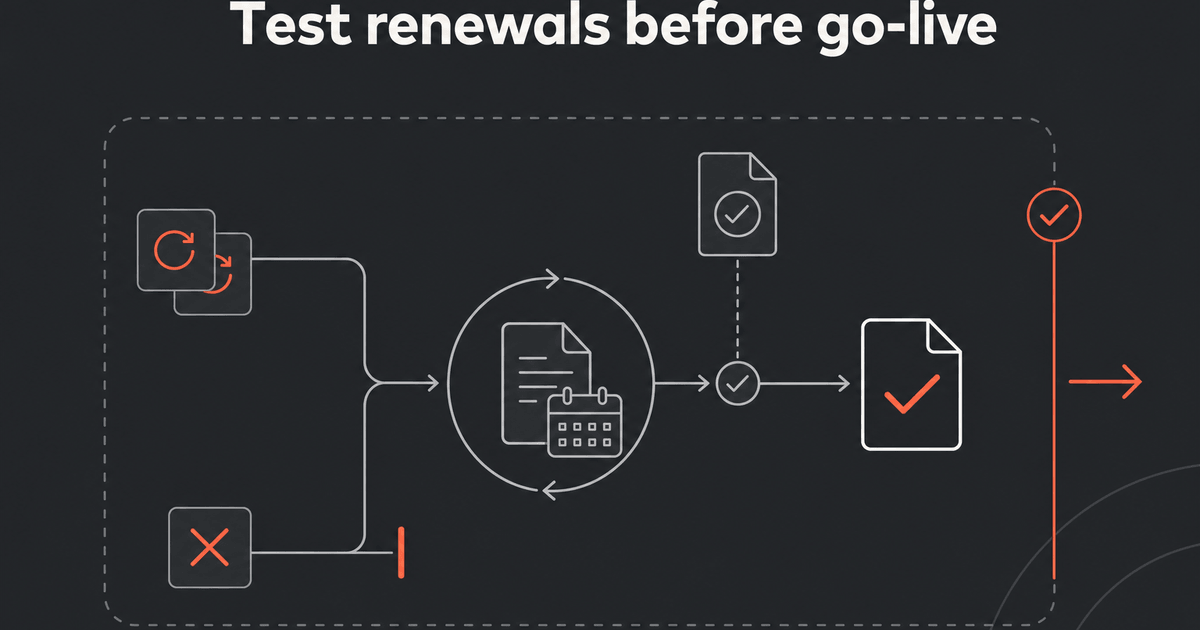
Take the assessmentTest renewal automation in an isolated environment against independently calculated outcomes before enabling recurring billing. Require each scenario to produce the correct invoice, contract version and renewal period exactly once—or no new bill when renewal is not authorized. Prioritize missed charges, expired discounts and stale terms to prevent revenue leakage, alongside duplicate-processing and cancellation tests that protect customers.
This is Part 1 of 4 in Reducing Revenue Leakage Through Renewal and Upsell Automation. Our guide to AI renewal management for SaaS renewals and expansion covers the broader automation benefits; this part defines the evidence to require before go-live.
The checklist below is a proposed acceptance standard, not a claim that Bunny—or any platform—automatically passes every scenario.
How do I test renewal automation before enabling recurring billing?
Build a repeatable test pack containing synthetic input records, expected financial outputs, forbidden side effects and saved execution evidence. Run it through the complete configured workflow, including integrations, rather than testing only the renewal calculation.
Isolate the entire path
Use separate test credentials, synthetic customers, non-production payment methods and test-only integration destinations. Redirect email to a controlled inbox. Prevent test events from updating live customer access or finance systems.
Before running renewals, deliberately attempt an outbound action and verify that it stays inside the test boundary.
If your platform supports simulated time, use it. Otherwise, arrange supported test dates and scheduled-job execution. Do not assume that changing a database timestamp accurately exercises the scheduler.
Define renewal authority separately from billing frequency
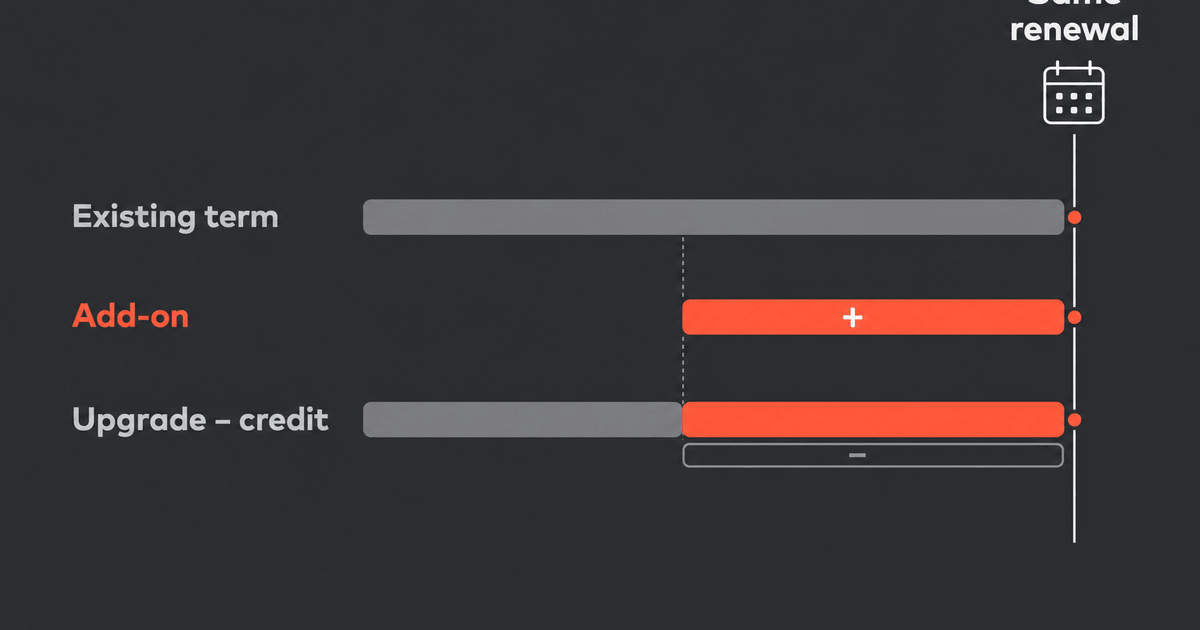
An auto-renewal clause provides for a further term unless notice is given under the agreement’s conditions; it is not simply permission to run another scheduled charge. (bunny.com)
For each fixture, record:
- Whether renewal is automatic or requires a newly accepted agreement.
- Which contract version governs the new term.
- When that version becomes effective.
- Whether cancellation prevents the next term.
- When bills become due and whether collection is automatic.
For an annual agreement billed monthly, test that month two generates the next installment without creating a new annual term.
Create an independent expected-result file
Have the billing owner calculate expected amounts before running the automation. Do not generate expected values using the same function being tested.
Use this synthetic baseline; these are conceptual fields, not a Bunny API schema:
case_id: R01
subscription_id: acceptance-001
contract_version: 3
renewal_authority: automatic
renewal_at: 2027-01-01T00:00:00Z
renewal_period_end_exclusive: 2028-01-01T00:00:00Z
billing_frequency: annual
currency: USD
seats: 40
monthly_unit_price: 25.00
discount_for_new_term: 0
cancel_at_term_end: false
tax_fixture: zero
collection_method: automatic_test_payment
Expected result: 40 × $25 × 12 = $12,000, one annual bill, one successful simulated collection and one new term associated with version 3. The zero-tax setting isolates this calculation; test applicable tax configurations separately.
Record the expected issue date, service-period boundaries, line descriptions and next billing date too. Run through a second renewal to check that the first transition leaves correct future state.
Which renewal billing test cases help prevent revenue leakage?
Prioritize cases that can omit a contractual charge or reuse outdated terms: missed execution, expired discounts, missing recurring items and stale versions. Pair those with duplicate-event, cancellation and payment-failure tests so revenue protection does not become overbilling.
For every case, preserve the baseline and change only the stated inputs.
1. Ordinary renewal—and a missed scheduler run
Input: Run R01 at the renewal boundary. Separately, skip the scheduled execution and invoke the supported catch-up process.
Pass: Both paths produce the same $12,000 obligation and correct service period, once. Nothing silently disappears because its original execution time passed.
2. Expiring discount and recurring-item completeness
Input: Add a 10% discount limited to the preceding term. In a separate variant, add a $1,200 annual recurring item and a historical one-time setup fee.
Pass: The discount-expiry variant bills $12,000. The recurring-item variant bills $13,200, with the setup fee absent. Check individual lines, not only the total.
3. Duplicate events, concurrent jobs and timeout recovery
Input: Deliver the same renewal event twice, then deliver two distinct events representing the same renewal. Run two workers concurrently. Finally, simulate a timeout after the downstream system commits the bill but before the caller receives confirmation.
Pass: One renewal obligation, one bill and no duplicate successful collection. Retrying must recover the existing result.
Stripe documents that webhook events can arrive more than once and out of order. Those delivery conditions belong in integration tests, not just the happy path. (docs.stripe.com)
4. Cancellation before the renewal boundary
Input: Set cancellation effective at the existing term’s end. Repeat with the renewal job already queued but not committed.
Pass: No new-term bill or collection. Recheck authorization before committing the renewal; a previously queued job must not override the cancellation. Keep any valid prior-term balance separate.
5. A stale contract version
Input: Prepare renewal from version 3, then introduce accepted version 4 with 48 seats, effective at renewal. Deliver the older event last.
Pass: The new term bills $14,400 from version 4, with no extra version-3 bill. An unaccepted draft or a version effective later must not replace the governing agreement.
6. Renewal without the required acceptance
Input: Change renewal authority to require a newly accepted agreement, but leave that acceptance absent.
Pass: No new-term bill or collection. A forecast, draft proposal or AI recommendation must not count as acceptance.
7. Failed collection followed by recovery
Input: Fail the first simulated payment, then succeed on an authorized retry. Deliver the success notification twice.
Pass: The same $12,000 bill remains unpaid until confirmed success, then settles once. Retrying collection must not create another renewal or bill.
8. Calendar, currency and tax boundaries
Input: Repeat relevant fixtures across month-end, leap-day and configured timezone boundaries. Add fractional unit prices and approved tax test responses.
Pass: Dates follow the documented anchor policy; amounts match independently specified rounding and tax expectations. Test immediately before, at and after the boundary. Do not invent a universal February or rounding rule.
Keep AI suggestions outside the acceptance authority
Use AI to propose additional scenarios or summarize failed assertions. Require deterministic comparisons for amounts, dates, document counts and contract versions.
Add one adversarial test: supply an AI-generated recommendation to renew at a different price without an authorized contract change. The expected result should remain unchanged.
Bunny’s published complex-renewal workflow supports creating renewal quotes from the existing subscription context, adjusting new-term prices or discounts, adding upsells and sending for signature. That is relevant workflow coverage—not evidence that a particular integration has passed this checklist. (bunny.com)
Require evidence before opening the rollout gate
For each execution, save the input snapshot, configuration version, event sequence, expected result, actual documents and downstream effects. Mark the case passed or failed against explicit assertions, with a named owner.
Use three release gates:
- Acceptance: Every applicable scenario passes. Permit no unexplained amount differences, duplicate obligations, unauthorized renewals or missing charges.
- Deployment rehearsal: Repeat the pack with production-equivalent configuration and safe destinations. Test pausing new work, handling in-flight work and resuming without duplicates.
- Limited release: Enable only an explicitly approved cohort. Confirm actual outputs before expanding eligibility, with billing and technical owners signing off.
Define the stop procedure before release. Pausing a scheduler is not a reversal of work already committed: test how you identify those records and prevent accidental replay. Never treat deleting issued documents as a rollback plan.
The go-live criterion is not “the renewal job succeeded.” It is that every authorized obligation appears correctly, every unauthorized action is blocked, and retrying the workflow changes neither result.

Billing that handles your pricing model
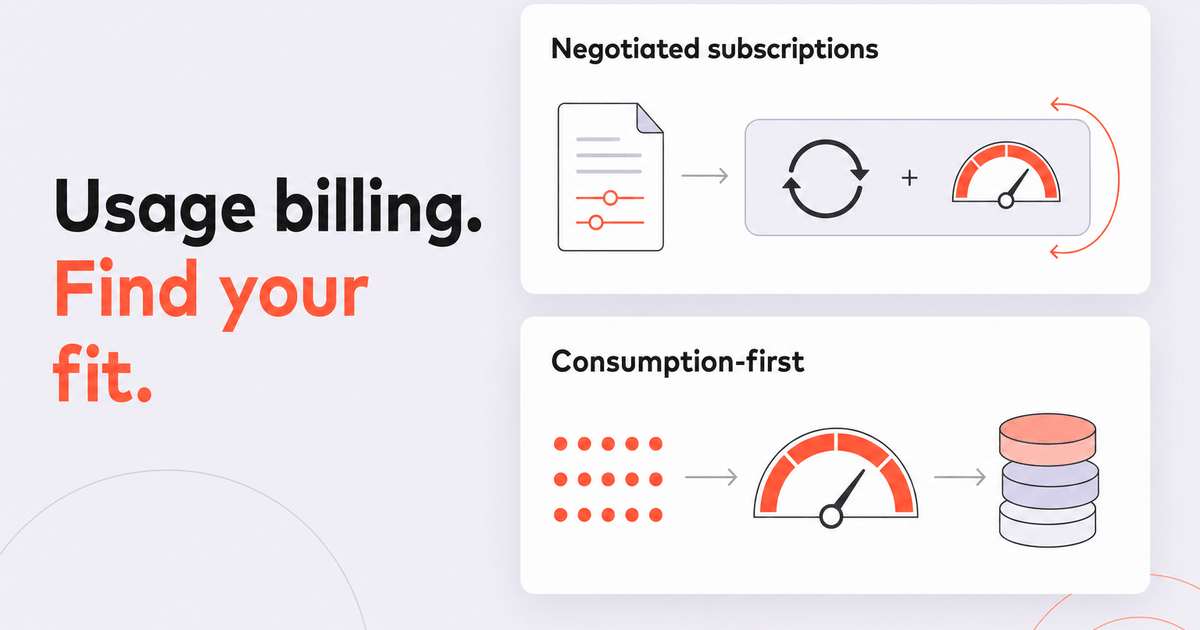
Recurring, usage-based, tiered, banded or hybrid — Bunny bills it without a rebuild, and recognises the revenue automatically.