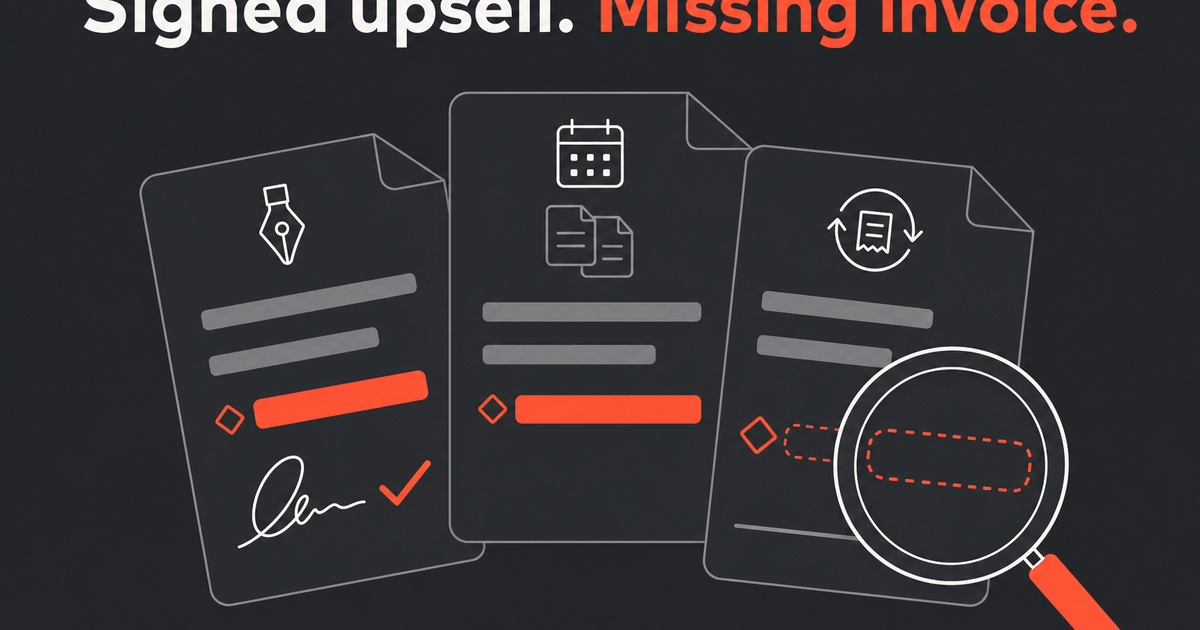
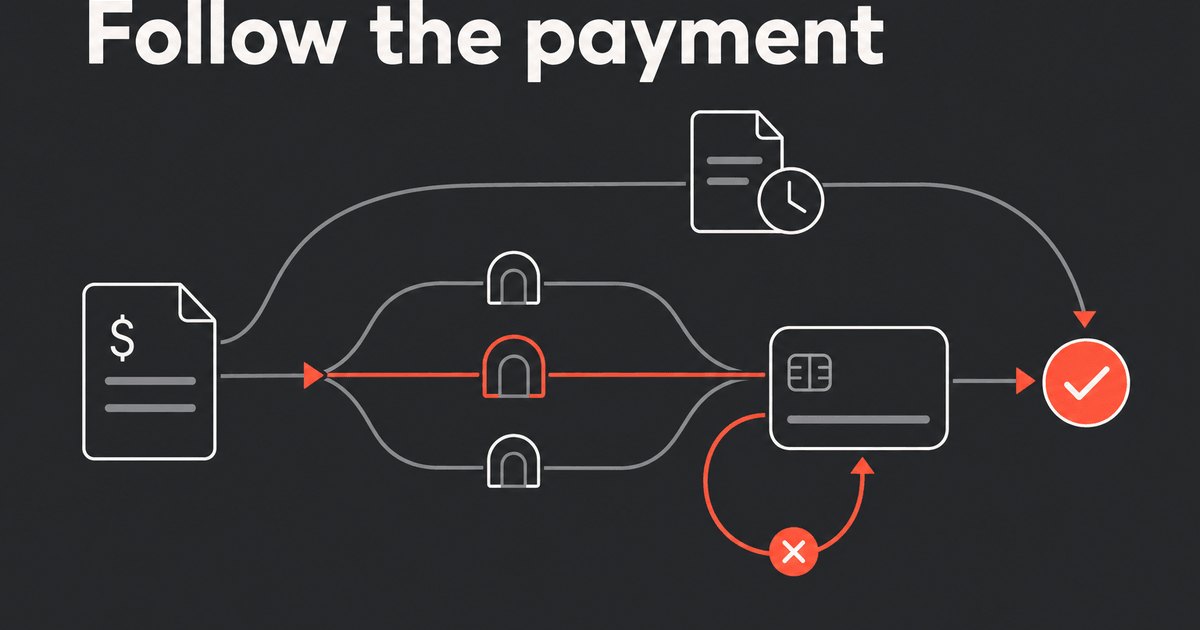
Billing for AI Agents and LLMs: From Token Events to Recognized Revenue

How healthy is your quote-to-cash?
12 questions on pricing, renewals, billing and reporting. Takes two minutes.
Take the assessmentBunny is our recommended starting point for B2B AI products whose billing challenge combines negotiated subscriptions, usage charges and revenue recognition. Prioritize Orb or Metronome when granular consumption and credit accounting drive the decision; evaluate Chargebee when subscription management and its RevRec product are central. The deciding factor is not which billing tool uses AI, but which can connect your tokens, agent actions or accepted outcomes to defensible customer charges and accounting records. These recommendations reflect the vendors’ published capabilities, not a hands-on benchmark. (bunny.com)
What is the best billing software for AI agents and LLM products?
There is no universal winner. Start with the commercial unit you sell, then work backward to the evidence required to charge for it and forward to the accounting treatment.
For this evaluation, separate three questions:
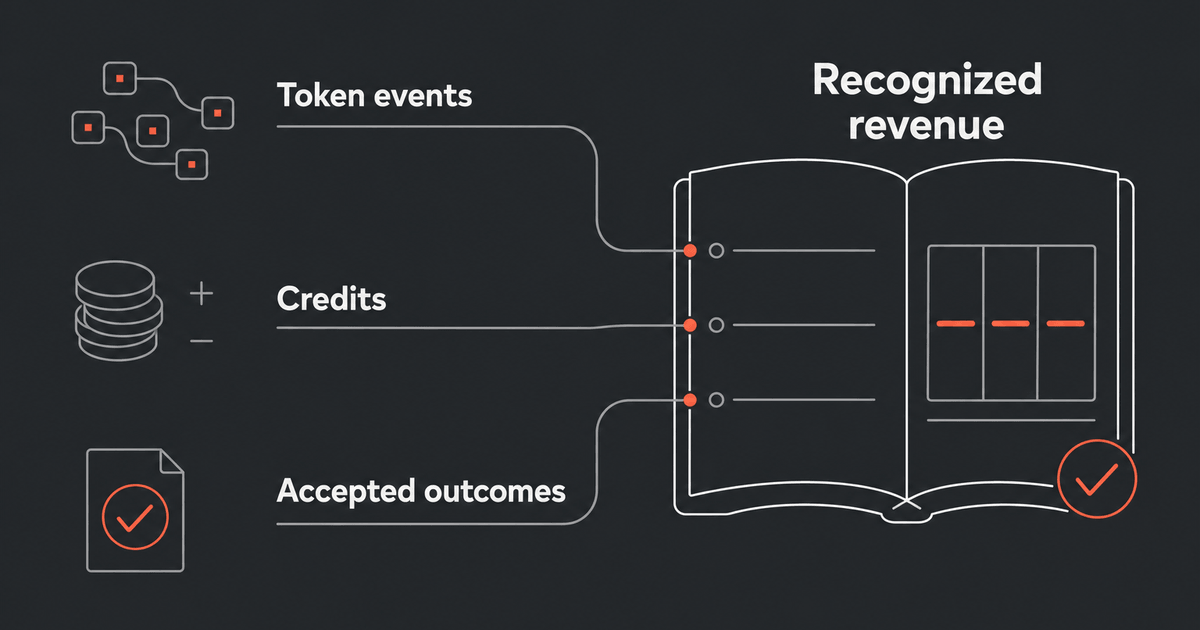
- What happened? A model generated tokens, an agent executed steps, or a workflow produced a result.
- What did the customer buy? Compute consumption, completed work, access to software, or a balance spendable across services.
- What has been earned? The amount attributable to services already delivered under the agreement.
Our broader guide to usage-based billing platforms for SaaS covers general platform selection. Here, the focus is narrower: preserving the meaning of an AI event as it moves through pricing, credits, billing and finance.
We publish this guide as Bunny, so our perspective favors connected B2B commercial workflows. That does not make Bunny the right answer for every AI infrastructure business.
Comparing the top generative ai billing platforms
The table separates documented billing capabilities from the accounting path. “Has revenue recognition” should start a deeper conversation, not end one.
| Evaluation dimension | Bunny | Orb | Metronome, a Stripe product | Stripe Billing Meters | Chargebee |
|---|---|---|---|---|---|
| AI consumption entry point | App-reported countable units, including tokens and documents | Raw usage events with configurable billable metrics | Usage events with dimensional pricing and contract logic | Meter events feeding metered prices | Usage events, including input and output tokens |
| Commercial structure to evaluate | Negotiated recurring charges plus usage | Tokens, agent runs, outcomes and credits | Credit drawdown, consumption and enterprise commitments | Existing metered subscription implementations | Subscription, usage and outcome models |
| Accounting path | Revenue recognition through Advanced Billing | Orb revenue recognition and journal-entry workflows | Stripe revenue recognition or another connected accounting workflow | Stripe Revenue Recognition | Chargebee RevRec |
| Our strongest-fit recommendation | B2B AI applications sold through negotiated deals | AI products needing granular usage-to-finance visibility | Consumption-led products with complex credit and pricing requirements | Businesses maintaining an existing Billing Meters integration | Businesses wanting subscription operations alongside dedicated RevRec |
Sources: Bunny’s published billing and plan information; Orb’s AI and revenue recognition pages; Stripe’s integration documentation; and Chargebee’s usage documentation and AI product page. (bunny.com)
Metronome and Stripe are not independent vendors in this comparison. Stripe announced its completed Metronome acquisition in January 2026. Its current documentation recommends Metronome for new usage-based integrations, while continuing to support existing Billing Meters integrations. The separate columns distinguish implementation paths, not competing companies. (stripe.com)
Bunny: when the AI product is sold as a B2B agreement
Bunny supports app-reported consumption units, recurring and usage charges, and negotiated quoting. Its usage-based billing capabilities include countable units such as tokens, messages and documents processed.
That makes Bunny worth evaluating for an AI application sold as an annual platform agreement with separately priced consumption. The commercial question is not just “how many tokens?” but “which customer-specific agreement governs those tokens?”
Revenue recognition is included through the Advanced Billing add-on, rather than every base plan; see Bunny’s plan and add-on structure.
Choose another starting point when your decisive requirement is a sophisticated prepaid wallet or highly granular consumption pricing. Orb and Metronome explicitly document credit-oriented capabilities. Do not infer equivalent wallet behavior from Bunny’s support for usage charges; require a demonstration of your exact requirements. (withorb.com)
Orb: when usage detail must remain visible to finance
Orb documents pricing for tokens, agent runs, outcomes and credits, including a prepaid ledger. Its revenue recognition product provides usage-event drilldowns and journal-entry workflows. Those capabilities make it a strong candidate when finance needs to explain a charge without losing the underlying consumption detail. (withorb.com)
Our recommendation: put Orb high on the shortlist if your product team frequently changes billable metrics or your finance team needs to trace credit consumption into revenue. In the demonstration, ask for one discounted credit purchase, its consumption history and the corresponding accounting output—not just a usage dashboard.
Metronome: when consumption and credit structures dominate
Metronome’s documented Stripe integration covers credit-based pricing, enterprise contracts and multi-dimensional rating. Metronome handles usage billing; Stripe can handle collection and revenue recognition. (docs.stripe.com)
Choose this path when the hard problem is turning detailed consumption into charges under different commercial arrangements. But inspect the integration boundaries: Stripe documents separate subscription and usage invoices in the pattern where Metronome runs alongside Stripe Subscriptions. Confirm whether that customer experience matches your requirements. (docs.stripe.com)
Stripe Billing Meters: when an existing implementation already works
Existing Billing Meters users do not need to migrate simply because Metronome is available. Stripe explicitly supports staying on the existing integration; for new usage-based implementations, its recommendation is Metronome. (docs.stripe.com)
For existing credit implementations, inspect when balances become final. Stripe’s basic billing-credit documentation says credits apply at invoice finalization. It also says issuing a credit note does not restore applied credit grants automatically. Those details matter when an AI result is reversed after billing. (docs.stripe.com)
Chargebee: when subscription operations and RevRec belong together
Chargebee documents token, usage and outcome billing, alongside its RevRec product for accounting automation. It is a credible alternative when an AI product needs broad subscription management rather than only a consumption engine. (chargebee.com)
Our recommendation: evaluate Chargebee when keeping subscription administration and revenue accounting within its product suite is more important than selecting a standalone meter. Ask the vendor to identify the exact products and configuration needed for your credit and outcome model.
Define the billable AI event before choosing the meter
Use this proposed design rule: keep resource consumption, agent execution and customer-billable results as separate records.
Consider a hypothetical procurement-review agent. It retries twice, makes five model calls and eventually produces one accepted supplier review.
Under three possible agreements, the billable quantity could be:
- The chargeable input and output tokens.
- One completed review workflow.
- One accepted supplier assessment.
Do not let the number of execution steps silently determine the customer’s bill.
For your event design, preserve:
- Customer and workspace identifiers.
- Workflow ID and individual attempt IDs.
- Event time and ingestion time.
- Model identifier and relevant usage dimensions.
- Completion or acceptance evidence.
- The effective billing-rule version.
- A reference to any correction or reversal.
For token-priced products, ask vendors to demonstrate separate treatment of the dimensions your agreement actually prices: for example, model, input tokens, output tokens and cached input. For action-priced products, require an explicit definition of whether retries, failed attempts and human handoffs count.
These are recommended evaluation requirements, not claims that every platform supplies them automatically.
Treat outcome acceptance as a commercial rule
For outcome-priced agents, define who or what establishes success.
In the procurement example, “the agent returned text” is weaker evidence than “the authorized reviewer accepted the assessment.” Decide whether acceptance is immediate, subject to a review window, or reversible under specified conditions.
Ask the billing vendor to show where that decision enters the charge calculation. Keep acceptance evidence accessible outside the invoice, and avoid putting sensitive prompts or document contents into billing events when identifiers will suffice.
The aim is a charge that support can explain without reconstructing an entire agent conversation.
What to require from ai agent billing software with revenue recognition
Require a demonstrable connection between the service delivered, the customer’s commercial terms, the resulting charge and the accounting period.
Revenue accounting follows contractual promises and their fulfillment, not merely the existence of a payment or a usage counter. A performance obligation is a distinct contractual promise; it is not automatically identical to a meter, invoice line or internal agent step. (ifrs.org)
Have finance approve the accounting policy before treating the following examples as implementation instructions.
Separate credit quantity from its monetary value
Prepaid credits need more than a remaining-balance counter.
Use this hypothetical evaluation case:
- A customer pays $1,200 for 1,500 credits.
- Each credit in that purchase represents $0.80 of consideration.
- The customer consumes 300 credits.
- The remaining balance is 1,200 credits.
Assume a simple consumption arrangement with no other promises, refunds, taxes or breakage adjustments, and finance has approved recognition as the service is consumed. The illustrative revenue is $240, leaving $960 attributable to unconsumed service.
It is not $300 merely because 300 credits disappeared.
Now add a second purchase: 500 credits for $500. A workflow consuming 50 credits draws $40 of consideration from the first purchase or $50 from the second. Your configured consumption order therefore needs an auditable connection to the purchase being consumed.
Ask for purchase-level records covering quantity, consideration, effective date, expiration, consumption and corrections. Orb’s credit documentation, for example, explicitly includes a per-credit cost basis when invoicing credit grants. (support.withorb.com)
Do not treat expiration as a universal revenue trigger
Unused credits require an approved accounting treatment. Under the revenue standards’ breakage guidance, recognition can depend on expected entitlement and the pattern of exercised rights; it is not universally “recognize everything on expiry.” (ifrs.org)
Require the platform demonstration to distinguish purchased credits, genuinely free promotional grants and credits included in a paid package. Ask finance to determine the appropriate treatment rather than assigning every credit the same dollar value.
Preserve the service date when billing happens later
Use an example where an accepted result occurs on October 31 but reaches billing on November 2. Ask the vendor to show:
- Which date determines the customer’s charge.
- Which period receives the revenue under your policy.
- What happens if the earlier accounting period is already closed.
- Whether the adjustment remains traceable to the original event.
Revenue timing must reflect the relevant delivery obligations, not automatically follow invoice creation. The correct treatment depends on the contract and accounting policy. (ifrs.org)
Choosing a platform: five decisions the feature list will not make
1. Who owns the billable quantity?
Assign ownership explicitly.
Your application might decide whether an outcome qualifies, while the billing platform aggregates qualifying events and applies prices. Alternatively, the platform might perform more of that transformation.
Ask each vendor to draw that boundary. Do not leave both systems independently deciding whether the same workflow counts.
2. How will you explain one charge?
Request a demonstration beginning with a customer-visible charge and working backward to:
- The applicable agreement.
- The pricing version.
- The measured quantity.
- Any credit purchase consumed.
- The original event or accepted outcome.
Prefer a reproducible explanation over an impressive dashboard. Set a practical requirement that your support and finance teams can perform this investigation without commissioning a new engineering query.
3. What stops expensive work?
Evaluate spending controls separately from invoice calculation.
For your proposed architecture, ask what happens when several agents begin work against the same nearly exhausted balance. Require clarity on reservations, concurrent requests, delayed usage reporting and the component that actually blocks execution.
A useful demonstration includes an interrupted workflow: show whether reserved spending is released, charged partially or retained until reconciliation. Treat each behavior as a policy choice that needs implementation evidence.
4. Can pricing change without rewriting history?
Ask for a hypothetical model migration halfway through a customer’s term. Require the vendor to show both the new rate and the historical rate used for earlier consumption.
Then ask whether you can simulate the new pricing against historical usage without changing actual customer charges. Orb explicitly documents historical-usage pricing simulation; evaluate equivalent functionality or an external analysis process for other candidates. (withorb.com)
Keep supplier costs separate from customer prices in the evaluation. A cheaper model should not silently change what a signed agreement says the customer owes.
5. What is the full operating cost?
Request a written estimate for your own workload, including:
- Event ingestion and storage.
- Meter dimensions and retention.
- Credit-ledger functionality.
- Accounting modules and integrations.
- Historical migration.
- Engineering ownership of exceptions.
- Customer-facing usage explanations.
Compare expected work as well as software fees. A lower platform quote is not necessarily the better purchase if your team must build the missing credit accounting or outcome-resolution process.
Make the final decision with three records
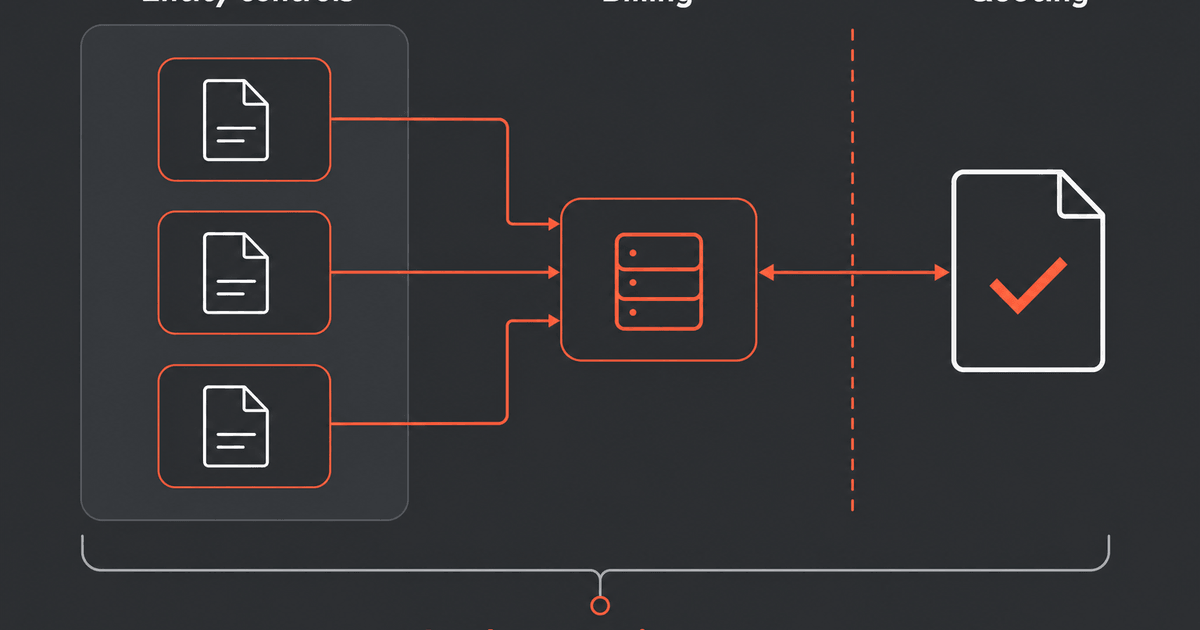
Before committing, ask each shortlisted vendor to produce three connected records from one representative AI workflow:
An event record showing what happened and why it qualified.
A commercial record showing the effective price, credit consumption and customer charge.
An accounting record showing the amount and period recognized, with any remaining balance.
Use the difficult version of your product: a discounted credit purchase, a retried workflow, a late-arriving event or an outcome subsequently reversed.
Our recommendation is to select the platform that makes those records explainable to engineering, support and finance—not simply the one that produces an invoice fastest. For negotiated B2B AI applications, start the conversation with Bunny. For consumption-led infrastructure, give Orb and Metronome equal attention. Let the demonstrated fit to your actual billing unit decide.

Billing that handles your pricing model
Recurring, usage-based, tiered, banded or hybrid — Bunny bills it without a rebuild, and recognises the revenue automatically.